

Veganism Beyond Politics
Why Ethical Movements Must Not Be Politically Owned

Understanding Veganism
The Vegan Society defines veganism as a philosophy and way of living which seeks to exclude—as far as possible and practicable—all forms of exploitation of, and cruelty to, animals for food, clothing, or any other purpose. It also promotes the use of alternative materials and encourages the development of a more compassionate society.
Based on this meaning, veganism is fundamentally an ethical stance rather than a political ideology. It represents a humane response to animal suffering, environmental degradation, and preventable harm—transcending political affiliations, cultural divisions, and ideological labels.
Veganism is grounded in compassion for animals, responsibility toward the natural world, and concern for human health. Reducing unnecessary harm is a moral principle that applies to all people, regardless of political views or social background.
Viewed this way, veganism is inherently inclusive and non-partisan. Ethical living, environmental stewardship, and compassionate choices are shared responsibilities, not tools for political alignment or identity. By emphasising these universal values, veganism becomes a common ethical ground—inviting reflection, dialogue, and practical action without coercion, moral posturing, or ideological pressure.
The 3 Pillars of Veganism
Health
Eating plant-based is healthier because it’s rich in natural nutrients
Environment
Eating plant-based is greener because it lowers environmental impact
Ethics
Eating plant-based is kinder because it reduces animal suffering
Veganism is not a political side.
Let us promote veganism as apolitical. Let us move beyond party politics, personal rivalries, and moral posturing. Let us avoid alienating those who wish to care for animals, the planet, and their own health. Let us promote a form of veganism that is open, inclusive, and meaningful to individuals of all political perspectives.
Why Has Veganism Become Politically Associated
In recent years, veganism has rapidly evolved from a niche lifestyle into a mainstream social movement, bringing tangible changes to society—from supermarket shelves to restaurant menus and public consciousness. Alongside this growth, veganism has increasingly been perceived as aligned with left-wing politics, likely due to overlapping values such as egalitarianism, social justice, and environmental concern.
Historically, left-leaning movements have emphasised equality, protection of the vulnerable, and critique of concentrated power structures. In contrast, traditional conservative perspectives often focus on maintaining established norms and addressing inequalities through different frameworks. Industrial animal agriculture—dominated by corporate interests, multinational corporations, and powerful lobbying groups—fits squarely within critiques commonly associated with left-leaning thought. As a result, vegans’ ethical objections to the exploitation and commodification of animals have often resonated with these critiques, though this alignment is descriptive rather than prescriptive.
Demographic patterns have also influenced public perception. At various times, vegan and animal rights activism has been more prominent among certain social groups, which has shaped how the movement is portrayed and understood. Statistical observations—such as higher representation of vegans within liberal or progressive circles—describe patterns of participation, not boundaries of belonging. They explain who has been most visible, not who veganism is intended for.
Policy trends have further shaped public perception. Left-leaning and green parties often introduce or advocate for measures that align with vegan priorities, such as reducing factory farming, promoting plant-based options in public institutions, and addressing agriculture’s contribution to global emissions. Animal welfare regulations, like stricter oversight in slaughterhouses or hunting restrictions, have also been more frequently debated within these political contexts. While these policies may appeal to vegans, ethical concern for animals and the environment transcends political ideology.
Ultimately, veganism became politically associated because ethical concerns about animals, the environment, and consumption habits entered politicized spaces—not because veganism itself demands political allegiance. This association is contextual rather than essential. When misunderstood as a defining feature, it risks narrowing a movement whose ethical foundations are universal in scope.
Understanding why this association emerged helps clarify the present discourse, but it should not define the future of veganism. At its core, veganism remains a personal and ethical position—one that can be meaningfully embraced by individuals across the entire political spectrum.
Why Veganism Should Stay Out of Politics
The reasons for adopting a vegan lifestyle extend far beyond political affiliations or party lines. Veganism is fundamentally about ethical, environmental, and health considerations that affect all people, regardless of ideology.


Environmental Responsibility
The ecological impact of animal agriculture is vast and global. Agriculture accounts for approximately 80% of deforestation, while animal farming alone consumes up to 25% of the world’s freshwater resources. Climate change, biodiversity loss, and environmental degradation are challenges that transcend borders, governments, or political ideologies. Solutions require collective ethical action, not partisan debates. Veganism addresses these issues directly by reducing demand for resource-intensive animal products.

Animal Welfare
Veganism is rooted in compassion for sentient beings. Animals raised for food are often subjected to confinement, intensive production systems, and practices designed primarily to maximize profit rather than welfare. Ethical concern for animals does not require a political stance—it is a moral choice, accessible to anyone willing to acknowledge the rights and dignity of non-human life.

Human Health and Wellbeing
Global health challenges highlight the urgency of plant-based diets. While COVID-19 claimed over two million lives worldwide, other health crises—closely linked to diet—pose equally serious risks. A 2017 study spanning 188 countries estimated that dietary risk contributed to 11.3 million deaths globally, and 26% of all deaths in the United States. Chronic diseases such as obesity, diabetes, and heart disease affect people regardless of their political affiliations. Adopting a plant-based diet promotes preventative health, empowering individuals to take responsibility for their own wellbeing in a way that politics alone cannot achieve.
People embrace veganism for a variety of reasons: environmental concern, compassion for animals, health, or religious and philosophical beliefs. Attempting to attach veganism to any political ideology risks alienating those who do not identify with that ideology, deepening societal divides, and perpetuating stereotypes. To preserve the universal and inclusive nature of veganism, it must remain apolitical.
Veganism transcends political manifestos, party lines, and media stereotypes. Its principles—compassion, responsibility, and ethical reflection—are accessible to everyone. By keeping veganism out of politics, the movement can focus on what truly matters: protecting the planet, respecting animal life, and promoting human health for all, independent of ideology or political affiliation.

Veganism Belongs to No Political Side
Veganism is not a political identity, nor is it a tool of any ideological camp. It is a personal and ethical response to a simple but profound question: How do we treat other beings that can feel? The answer to that question is independent of party lines, economic theories, or political labels.
Essentially, veganism is based on empathy, responsibility, and an understanding of the implications of our daily choices. These are human values – not political tactics. People come to veganism through different ways: their own reflection, lived experience, cultural background, or moral intuition. What makes them one is not a common ideology but a common concern for the alleviation of unnecessary suffering.
When veganism is framed as belonging to a particular political side, it risks losing its human core. Ethics become arguments, compassion becomes a position to defend, and dialogue turns into division. Veganism does not require ideological agreement; it asks only for moral consideration.
Veganism, being beyond political limits, is still open to everyone and does not exclude anyone. It addresses individuals before movements, conscience before policy, and our capacity for empathy before we put a label on ourselves.
Veganism Is Primarily an Ethical Philosophy, Not a Left-Wing Political Ideology
First and foremost, veganism is not a political doctrine but rather a set of ethics. It is a moral philosophy that revolves around the idea that animals other than humans are sentient beings, and thus, they are capable of pain, fear, and even happiness. As such, their suffering should not be considered acceptable or insignificant.
In contrast to political ideologies which seek to govern societies through various forms of power, economics, or governance, veganism is about moral responsibility on both personal and collective levels. The movement urges people to think about their deeds and to stop using methods that cause harm merely because they are familiar, especially if there are other options.
While veganism may intersect with political discussions or social movements, it is not dependent on them. One does not need to adopt a left-wing worldview—or any political worldview—to acknowledge that causing unnecessary suffering is ethically problematic. Compassion, restraint, and moral accountability are not owned by any political tradition.
By understanding veganism as an ethical philosophy rather than a political ideology, we preserve its clarity and universality. It remains a call to conscience, not conformity; a matter of values, not voting blocs.
Individuals Across the Political Spectrum Can Be Vegan
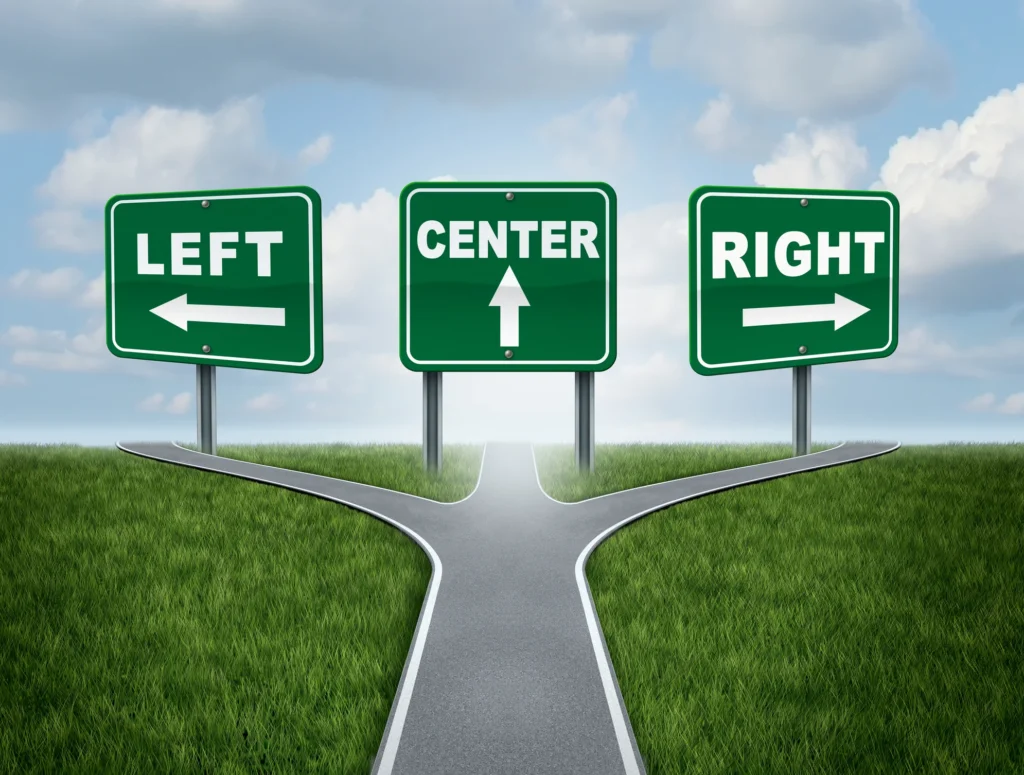
Individuals with different political opinions – left, right, centrist, or politically unaffiliated – can and do become vegans. What unites them is not a common ideological view, but the shared recognition of their obligation to other sentient beings.
Veganism is not a condition where people are required to give up their political views or take up new ones. It merely asks people to consider the ethical implications of their daily habits. Therefore, veganism becomes a single point where people meet rather than a dividing line – a place where the moral consideration is above the political identity.
Its strength lies precisely in this openness: the ability to resonate with people of varied worldviews while remaining grounded in a clear ethical commitment.
The Risks of Politicising Environmental and Animal Ethics
Attaching environmental and animal ethics to any political ideology carries serious consequences—undermining both the movements themselves and the welfare of the beings they strive to protect.
Backlash and Polarisation
When a cause is labelled as “belonging” to a political group, it often triggers reflexive rejection from those on the other side. Ethical responsibility becomes a battlefield for cultural identity rather than a shared moral duty.

Exclusion of Potential Allies
Political framing can unintentionally create invisible barriers. People who care deeply about animal welfare or environmental protection—but do not share the same political perspective—may feel silenced, dismissed, or unwelcome. True ethical movements should unite, not divide.
Instrumentalisation of Morality
When ethics are co-opted for political gain, the original moral purpose is diluted. Scientific evidence is selectively presented, complex realities are oversimplified, and the focus on the suffering of animals or the fragility of ecosystems becomes secondary to partisan advantage.

Erosion of Public Trust
As movements become politicised, trust weakens. Communities from rural, religious, or culturally distinct backgrounds may disengage—not because they reject compassion, but because the cause no longer feels universal. Ethics meant to unite humanity instead becomes a cultural or political marker.
Polarisation is Hindering Global Progress
In an increasingly polarised world, complex global challenges are too often reduced to ideological battlegrounds. Issues that demand collective action—such as environmental sustainability, public health, and ethical responsibility toward animals—become trapped in political narratives that divide rather than unite. When moral concerns are framed as belonging to one side of the political spectrum, they risk being rejected by those who feel excluded or misrepresented.
Polarisation transforms shared human responsibilities into symbols of identity. Instead of questioning the effectiveness or ethicalness, the debates turn into issues of who supports an idea and which political group it is associated with. Consequently, the real solutions get postponed or rejected, not because they are without merit, but because they are perceived as politically “owned.”
This dynamic has tangible consequences. Environmental initiatives stall when climate action is treated as a partisan issue rather than a scientific necessity. Dietary and health reforms lose momentum when plant-based lifestyles are framed as ideological statements instead of evidence-based choices. Even animal welfare becomes a point of division, despite broad public agreement on the need to reduce unnecessary suffering.
The past is a teacher that shows us the faster progress is made through cooperation instead of confrontation. Global challenges do not recognize political borders or ideological affiliations, and neither should the ethical responses to them. Overcoming polarization is therefore not a matter of diluting values, but of reclaiming them as shared responsibilities—accessible to all, regardless of political identity.
Only by moving beyond entrenched divisions can society mobilize the scale of participation required to address problems that affect everyone. Unity, not ideological conformity, is the foundation of lasting global progress.
Historical Contradictions: Ideals vs. Reality
Throughout history, political ideologies have consistently presented themselves as moral frameworks designed to advance justice, equality, and protection for the vulnerable. In principle, these ideals suggest a commitment to reducing harm and promoting fairness. In reality, however, the implementation of such values has often been partial, inconsistent, or shaped by competing economic and political interests.
For example, many political movements have publicly advocated for equality and social justice while simultaneously presiding over industrial systems that relied on large-scale exploitation. Governments that promoted workers’ rights often tolerated or expanded environmentally destructive industries when economic growth was at stake. Similarly, states that claimed to defend the powerless have historically supported practices—such as intensive resource extraction or industrial farming—that externalised harm onto animals, ecosystems, or marginalised communities.
Environmental protection offers another clear illustration. While numerous political parties have adopted environmental language and pledged sustainability, deforestation, biodiversity loss, and climate degradation have continued under a wide range of political systems. The persistence of factory farming—despite decades of ethical debate and scientific evidence—demonstrates how stated commitments to sustainability can coexist with practices that fundamentally contradict them.
Such patterns are not confined to any single ideology. Across history, political systems of various orientations have struggled to reconcile moral aspirations with institutional realities. Ethical progress has rarely followed a clean ideological path; instead, it has emerged through sustained pressure, cultural change, and individual responsibility rather than political alignment alone.
These historical contradictions are particularly relevant when considering ethical movements like veganism. When moral responsibility is tied too closely to political identity, it becomes vulnerable to the same compromises that have repeatedly diluted ethical ideals in the past. Veganism, by contrast, operates at the level of personal and collective ethical choice—one that does not depend on political promises or ideological consistency.
Veganism is more than a choice—it is a declaration of conscience. It asks us to confront the impact of our daily actions on sentient beings and the planet, not through political affiliations, but through ethics, empathy, and responsibility. It challenges us to prioritise moral clarity over ideology, compassion over partisanship, and shared humanity over divisive labels.
By transcending political boundaries, veganism creates a space where people from all backgrounds, cultures, and beliefs can come together around a single, unifying principle: the reduction of unnecessary suffering. It is a movement that speaks to our capacity for empathy, our obligation to act, and our power to make meaningful change—without asking anyone to compromise their political perspective.
In a world increasingly defined by polarisation, veganism reminds us that some truths are universal. The value of life, the responsibility to prevent harm, and the moral imperative to act with compassion are not owned by any ideology—they belong to all of us. By keeping the movement independent of politics, we ensure that its message is inclusive, its reach expansive, and its impact transformative.